 Jordan Armstrong | Actor

Great news! Last week Jordan booked a guest role on the Australian television soap Neighbours. Filming will begin during the first week of March and is due to air May 30th on Channel 11 in Australia and early June, Channel 5 in England. Stay tuned for more info.

The Hair Salon indiegogo crowd funding campaign recently completed a very successful two month run and with the help of our extremely generous supporters we were able to a raise a staggering $10,001! From myself and the team we’d like to thank all that partook in the campaign and all those that helped raise awareness – You are all amazing.
We will be posting “thank you” videos to all our funders on the Facebook page as we record them over the coming weeks – With over a 150 funders you’ll be getting a lot more laughs!
Since the closing of the campaign we have had people ask whether they can still contribute and invest and if you’re one of these people the answer is YES! You can do so on the website www.thehairsalon.tv
Subscribe to the The Hair Salon YouTube channel and be the first to receive links to all new material and episodes.
Thank-you!
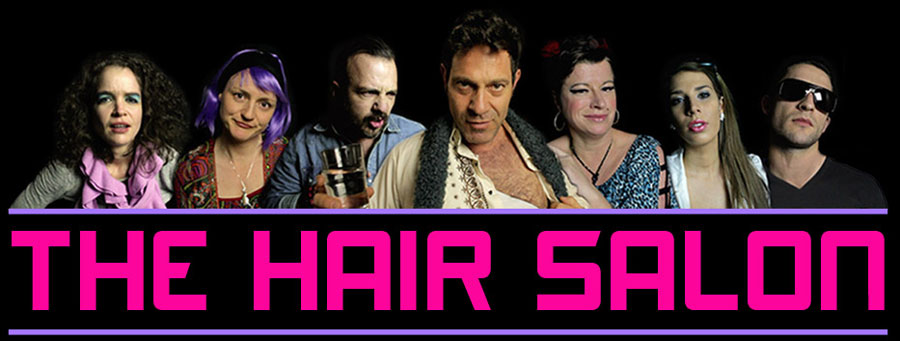
After months and months of character work and exploration The Hair Salon has finally landed!
“The Hair Salon is an improvisational mockumentary webseries tangling in the lives of seven over-the-top salonistas who work in a ‘cutting edge’ hair salon (in a suburban shopping mall). Break-ups and make-ups, fringes and minges, blow waves and blow j#bs – this is comedy nouveau with a style of its own.”
I play the character Norbert, a French Mauritian hair stylist. Check out the character introduction episode below.
Visit www.thehairsalon.tv for more information.
In March Jordan shot the following TV commercial for clothing company Spurling with production company Burning House.
Directed by Brett D’Souza, starring acting friends Eliza D’Souza and Lara Deam.
By Vivienne Mah
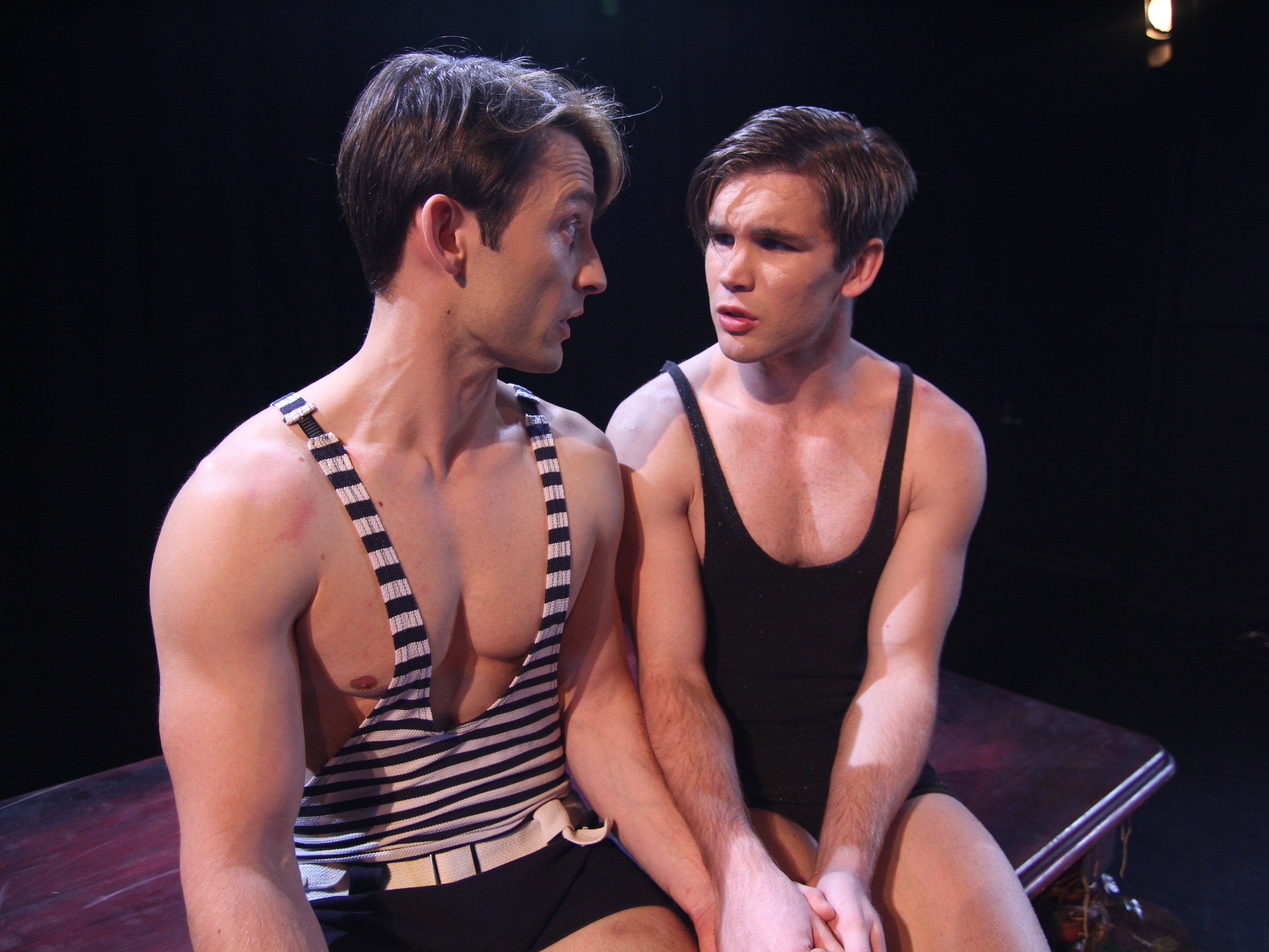 The tale of Peter Pan is firmly ingrained in our childhood, both as a whirling reverie of possibilities entertained by dreamers that hoped to escalate past the normality of a second grader, and a quiet guide to the frightening road of adulthood ahead. In our later years, the appeal still exists. The chance to simply unanchor yourself from the mundanity of half-lived dreams is no less tantalising than it was before. Yet other responsibilities take pride of place over the near stubborn disinterest Barrie’s most famous character displayed in self-sufficiency in a regulated world.
Despite these impossible ideals, the real life story of JM Barrie’s adopted sons and inspirations of Peter Pan are far removed from the neverending spiral of dreamers set free from the social aspirations of adolescents of the time. It’s this that playwright Barry Lowe focuses upon; the loss of innocence in boys who ignore the lesson his most famous character preached, and the half-lived dreams that ultimately let us down.
The play’s framework feels not unlike a documentary. Set in the 1920s and interspersed with monologues from J.M Barrie (Ian Rooney), Boothby (Matthew Werkmeister), Senhouse (Sean Paisley Collins) and Nico Davies (Ben Byrne) to contextualise their distinct reactions towards Michael’s encounter with Rupert Buxton (Jordan Armstrong). Director Robert Chuter takes great pains to ensure that the emotional beats are strung and carefully plotted as a build up for the historical deaths recreated – but can lack intense emotional payoff. While Lowe’s network of reactive monologues work successfully as a demonstration of how reality can be rewritten, or lost loves can be memorialised in the searching for answers, the elusiveness of Michael’s psyche and his death creates a disconnection between audience and actor: a level of voyeurism is found in the candid recollections of the characters, or indeed the intimate moments.
Coupled with the minimal turn of the century lighting and minimal, albeit lush furniture, at times a sense of space or time is lost. The related messy blocking does little to convey a sense of character or assist an understanding of context, just as the quick transition of lighting and sound feels muddled and leaves little chance for moments of silence and quiet dialogue to truly resonate.
Similarly, the characters feel occasionally one-note: the strength of the cast pushes a richer development that’s slow and steady in it’s unfolding. It’s towards the end of the first act that the play and it’s representation of faceted historical figures begins to find it’s legs – and they’re strong. Kieran McShane plays a convincingly sympathetic Michael Davies, torn between adulthood and the naive idealism of an adolescence. His controlled physicality belies both the self-aware uncertainty and eagerness of a man on the cusp of something, yet it’s in his raw pleas when the inner conflict can be seen just below the surface, that he excels. It’s difficult not to be charmed by the innocence he exudes.
As the antithesis to Michael, Armstrong lends a charisma and commanding, yet not imposing physicality to what is an almost elusive ideal. Despite the witty material he breezes through. It is again the brief moments of vulnerability that round out Buxton from being solely a manipulative, confident figure. Armstrong shines with a wordless hopelessness that all those who’ve been through the turbulent passage of adulthood can relate to. Paisley Collins as Senhouse injects some much needed comedy gold in rapid-fire banter, though just as easily inhabits a more contemplative figure whose modulated voice comes to suggest a weight he bears for all his determinedly aloof charm. The knowledge of unfolding tragedy can be found in those eyes, and Paisley Collins appropriately steps down the boisterousness of the youth in favour of the languid pace of one still unsure of what could be done to change a social climate.
It is, however Matthew Werkmeister in the role of Roger Boothby that bursts with all the unbridled conflict and tempered sorrow of a lost man. Baron Boothby later became known for his bisexuality and fight for homosexual rights, and accordingly, the facets of a boy struggling to come to terms with his own affection for Michael despite common decency are played with tender reserve. It’s his growing stiffness despite the youthful arrogance initially seen – the addition of glasses is a clever touch. It’s the desperation beneath his harsh words that could break hearts. In what is no doubt the highlight of the character’s monologues, despite Rooney’s ability to deliver pithy anecdotes, Boothby reflects upon the unravelling of his friendship with Michael like a contextualisation of his later political decisions. There’s no doubting the talents of the cast, nor their ability to bring more humanity to in their downplaying of emotions or underlying tension that could ravage the body. It’s much as if a mirror was held to the lives they lived.
This too, could explain the abrupt climax that will leave some dissatisfied with closure. There are no stage directions for death after all, no herald or fanfare or dramatic emotional score, but simply the players left behind to put the pieces together. Still, the implied memorialisation of Michael Davies in play and the thoughts of the cast reinforces the one element that’s spoken of: love, love that causes us to recall and try to rationalise what happened and how an act could have been stopped, and indeed what drives us to decisions that can’t be taken back. This is the death of Peter Pan’s innocence in a social context, but this is not the death of another kind of innocent ideal of ties that bind. Maybe this is how we’re all Peter Pans: in our desire to fly before the world clips our wings. The cast burn with all the longing they know they will one day be forced to put aside.
To the restless audience member; it’s certainly worth waiting for the beauty to start, no matter how shaky the initial first moments may appear. To the one-time viewer; Chuter’s carefully handled play is worth revisiting if not for the pithy script of relatable sentiment, then for the beautifully controlled performances of a cast that bring the right amount of pathos to a tale we know so little of.
by Astrid Lawton
Set amongst the British upper crust in 1920s Eton and Oxford, this Fly-On-The-Wall Theatre production explores the devastating consequences of ‘the love that dare not speak its name’
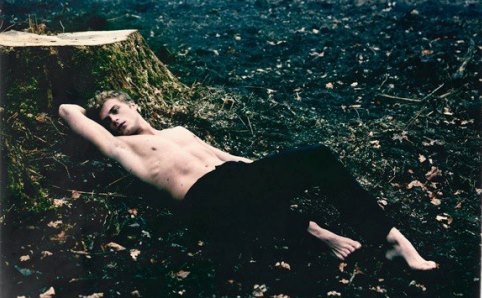
Barry Lowe’s 1988 script tells the coming-of-age story of Michael Davies (Kieran McShane), adopted son of Peter Pan author James Barrie (‘Uncle Jim’, played commandingly by Ian Rooney), and inspiration for the author’s stellar work.
Whilst studying at Eton, Michael encounters the rakish Rupert Buxton (Jordan Armstrong), he of the foppish fringe and devil-may-care bonhomie, who challenges Michael emotionally and physically in a manner quite apart from his Eton chums (Matthew Werkmeister and Sean Paisley Collins).
The story moves from Eton to Paris after matriculation, where Michael reconnects with Rupert on a memorable night in a French brothel, to university at Oxford, to Uncle Jim’s house off the coast of Scotland, and back to Oxford. Each location serves to heighten the tension in the burgeoning relationship between the protagonists, in a breathless will they/won’t they manner, which finally culminates by the loch on Uncle Jim’s property.
The casting is good but with some inconsistency in strength. Armstrong’s Rupert very effectively and commendably straddles cocky assuredness and insecurity, juggling calculatedness and tenderness, and allowing fleeting glimpses of J.M. Barrie’s proverbial Lost Boy to sneak through in his portrayal. Paisley Collins as Roger Senhouse is very impressive as the flamboyant public school boy blurting out Wilde-esque witticisms which are later revealed to mask a much deeper introspection. McShane has notable moments (usually in conversation with Uncle Jim) but his depiction of Michael’s sensitivity and innocence sometimes comes across as slight sulkiness, and on occasion he struggles to maintain the character’s accent.
The set and lighting are respectively evocative and atmospheric – non-intrusive but still definite features of the production. The costumes are perfect, and the beautiful score (by Andrew Bishop) is almost a character in itself, so prevalent and memorable is its haunting presence. Director Robert Chuter debuted the production in 1989 with the same theatre company, and this restaging is a fine renaissance for a new generation.
Review by Alex Paige
Being unfamiliar with this play, I was a little perturbed by its title. To my great relief, The Death of Peter Pan turned out not to be an attempt to skewer one of my cherished childhood heroes. Instead, this multilayered, elegantly written and often challenging play tells the sad true story of 1920s Oxford University student Michael Llewelyn Davies – one of the adoptive sons of Peter Pan author JM Barrie – and his tragic love affair with attractively brash and outspoken Rupert Buxton.
Presented as a reminiscence of Barrie’s, who introduces the story and characters, Death of Peter Pan takes us back to Edwardian times and the friendship between Eton schoolmates Michael, Roger Senhouse and Robert Boothby. Though none are ignorant of the existence of ‘the love that dare not speak its name’, they’re also well aware that there is no chance for two men to build a life together, at least not in England. This only becomes an issue for Michael when he finds himself falling head over heels for Buxton – and in true starcrossed fashion, it’s the very depth of their feelings for each other that seals their fate.
Some of the best scenes were those that explored the burgeoning feelings between Michael and Rupert – delicately played by the appealing Kieran McShane and Jordan Armstrong. Playwright Barry Lowe has expertly encapsulated how it feels for an adolescent male to fall deeply in love with another, only to realise with a devastating mixture of bewilderment and anger that society will never permit the expression of one’s feelings. Despite our distance in time from the play’s setting, these psychological states still play out today for many young men so their representation on stage remains as relevant as ever.
McShane and Armstrong were complemented by a strong supporting cast – particularly notable was the wickedly arch but subtextually sympathetic public school figure of Senhouse as played by Sean Paisley Collins. A special mention must also go to Ian Rooney, whose memorable characterisation of JM Barrie was richly nuanced. Director Robert Chuter did a great job ably backed up by expert costume and set design, while Andrew Bishop’s music was ethereally evocative. Death of Peter Pan is a moving and thought-provoking piece of theatre and this production is thoroughly recommended.
Boyish bildungsroman and lingering love story
By Myron My
Barry Lowe’s The Death of Peter Pan is a tragic and beautiful story of growing up and becoming a man. Set during the 1920′s, it follows the life of Michael Llewelyn-Davies – the adopted (and favourite) son of Peter Pan author, James Barrie – and his chance encounter with fellow student Rupert Buxton.
Kieran McShane and Jordan Armstrong do a flawless job as the two protagonists, Michael and Rupert respectively. Rupert’s arrogance and brashness is a perfect contrast to Michael’s ambivalence and fear of what is happening, and this dynamic ultimately leads to a first kiss, first love and first heartbreak for Michael. There are some strong relationship-defining moments on stage, including the scene at the Parisian whorehouse and Michael’s swimming lesson. The affection and tenderness between the characters has a heartfelt authenticity, and this is mainly due to the talents of these two performers.
The two are supported by a more-than-capable ensemble cast including Sean Paisley Collins as Roger Senhouse, Michael’s flirtatious college friend. Collins is superb in his role: not overdone and revealing a serious and sensitive side that (when it does come to the surface) leaves quite an impact. Similarly, Ian Rooney’s J.M. Barrie is impressive as he plays out the nuances of a man still trying to live in his own Peter Pan moment.
Robert Chuter returns to the Chapel to direct The Death of Peter Pan and his focus on and image of this production is breathtaking. He has put together a very fine cast and crew, including costume designer Elissa Hullah and hair and make-up artists Olivia Wichtowski & Kane Bonato whose efforts warrant particular mention. The show does use blackouts between scenes and although I am not generally a fan of these visual interruptions, the haunting musical score by Andrew Bishop was able to keep us utterly absorbed in the moment.
The Death of Peter Pan is Australian theatre at its unrivaled best. It’s always a joy to be enveloped by a production that has brought everything so seamlessly together and its effects will still be felt long after having seen it.

Set in the most romantic of times and in the most romanticised of places – 1920s Paris, Eton and Oxford – The Death Of Peter Pan is an emotionally stirring biographic tale of repressed desire, love and dreamy adulation. Written by the scribe of all things passionate, Barry Lowe, and directed by Robert Chuter, The Death Of Peter Pan is being given the usual Fly-On-The-Wall theatre treatment. Bristol-born and now Melbourne-based actor, Jordan Armstrong, tackles the seductive character of Rupert Buxton and while he confesses to developing a strong bond with all of the characters he’s played, the character and story of Buxton had a new level of magnetism for him as a person well as presenting him with a host of new challenges as an actor.
“What with the play being biographical, you really have to do a lot detective work to find out exactly who the person was in order to understand their motivations and to really honour them on stage; I have a responsibility to do Rupert Buxton justice,” Armstrong says. “This is totally trivial but it was a discovery that made me laugh. Have you ever heard of a dogcart? In the 1900s they had carts that were pulled by packs of dogs. They must have been cheaper than horses”
“With my work, I quite like to use animals to help develop my characters or even use traits of certain existing characters. With Rupert, I have thrown in a few traits of Kaa, the seductive and manipulative snake from The Jungle Book. One notable thing I have been working hard towards and has been somewhat of a challenge is ensuring that Rupert is likable throughout the play. There are scenes where on the surface he could come across as a manipulative, self-serving, troublemaker, when in actual fact, just below the surface is a deep sadness and a huge need to be loved.
“His actions and methods are quite alternative and a little unusual but he has the greatest of intentions at heart. If I am able to convey all of the above I will be very happy.”
The Death Of Peter Pan may be dealing in themes of same-sex attraction but the emotion of the play is truly universal and while these issues are at the forefront of political division right now, The Death… is essentially just dealing with unaccepted love.
“There is a profound line, ‘My heart didn’t come with a book of instructions’ which really struck a chord with me because, of course, who are we to judge what is instilled in some of us from inception and that is not a choice?” he says. “It is amazing to think that almost a century has passed since the events that transpired in The Death Of Peter Pan and yet there are still people who are against homosexuality and the marriage of such individuals. Hopefully this play will help portray love for what it is, a universal force that is without prejudice. Another strong universal element would be the breaking of conventions, rules, and traditions that are forced upon us by society in order to gain fulfilment and true happiness. Rupert knows that he cannot be happy living within these confines so, to the dismay and shock of others, he pushes the envelope.”
Preparation for the play hasn’t been easy for Armstrong and he’s more than thankful he’s able to take to the stage as Buxton. A bout of appendicitis and the emergency surgery that follows such a diagnosis did hold things up a little though.
“Rob Chuter, our director, did not turn his back on me and was, thankfully, able to push the dates back a week,” he explains. “So to anyone reading this who was directly affected by those date changes, I’m sorry, it was my fault, however the appendix gods shouldn’t get off too lightly. This knocked out a good ten days of rehearsal time and I was reduced to attending meetings via Skype.”
Abdominal surgery aside, Armstrong has also had to deal with the confronting and (literally) exposing nature of this play. “I’m going to be honest, I have never played any sexually confronting scenes like these before, but I’m surprisingly relaxed about it,” he says. “I am totally committed to my work and I knew that it was just a matter of time before something of this nature would arise. Especially when working with Rob who loves to push boundaries and confront audiences.
“As far as the audience, well, there is nothing overly confronting sexually in this play however I have no problem with confronting audiences if it means they’ll be forced to open up themselves for a moment and be vulnerable alongside me. It’s those moments that the audience take with them when they leave the theatre. The most important thing for me is that it serves the play and is not gratuitous.”
With the opening just around the corner, Armstrong explains the torrent of emotions he often goes through once those house lights are dimmed. “Speaking from past experience, opening night is always a mixture of excitement and nerves,” he says. “When you’re backstage and you hear all the people fill the theatre it is quite scary because you know that it’s on and there’s no turning back. There have even been times in the past when I have asked myself why I do this to myself, but that’s only beforehand. When I step out on stage all that falls by the wayside. Performing makes me feel alive and very few things make me feel that way.”
BY KRISS WEISS
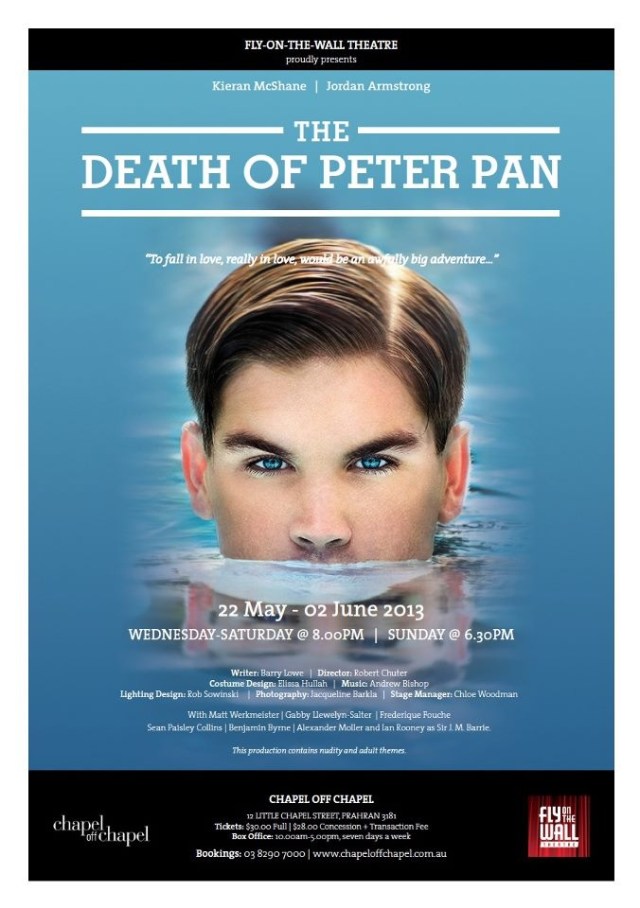
The Death Of Peter Pan runs from Wednesday May 22 – Sunday June 2 at Chapel Off Chapel.
Media posters are in and being distributed around Melbourne for the up coming season of The Death of Peter Pan. Bookings are now open at Chapel Off Chapel.
 Jordan Armstrong | Actor